
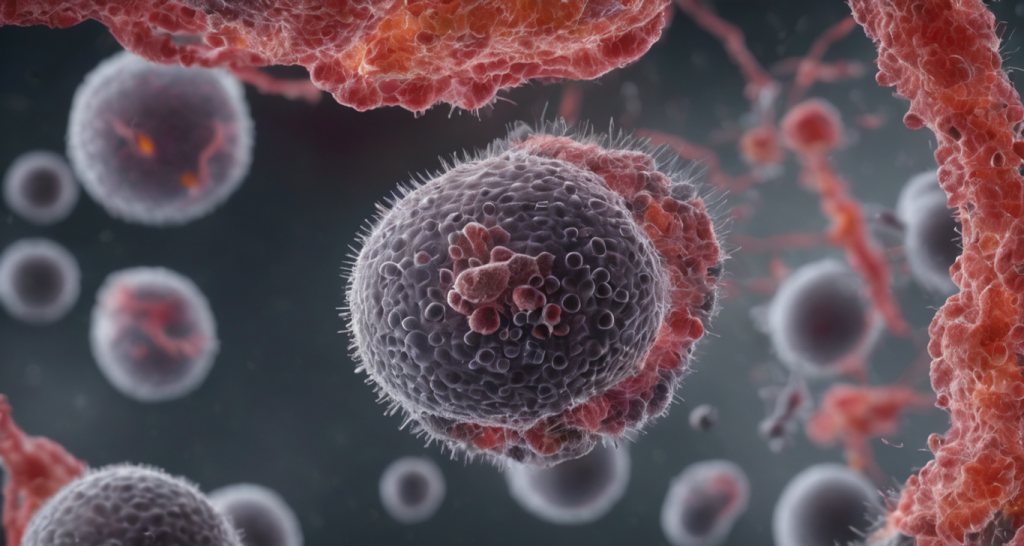
In the realm of futuristic healthcare, the concept of leveraging cellular vibrations for healing is emerging as a groundbreaking frontier. Let’s dive into the potential procedures, explore if specific ailments inherently induce cellular vibrations, discover audible sounds that may orchestrate cellular harmony, and, equally important, understand the possibilities and risks associated with this transformative approach.
Acoustic Resonance for Healing:
Procedure: Focused ultrasound and acoustic stimulation are being studied for therapeutic benefits, aiming to induce controlled cellular vibrations.
Possibilities: Targeted drug delivery, tissue regeneration, and disrupting cancer cells.
Risks: Precise control is crucial to avoid unintended tissue damage and heating.
Infrared Light Healing
Procedure: Use specific infrared wavelengths, applicate direct the infrared light towards the target area.
Possibilities: Pain Management, Wound Healing, Potential promotion of tissue repair, Potential healing cancer, Anti-Inflammatory, Improved Circulation, Enhancement of blood flow.
Risks: Eye Protection, Skin Sensitivity, Overheating, Individual Responses.
Harmonic Sounds for Cellular Harmony:
Procedure: Exploring audible sounds and frequencies that might positively influence cellular vibrations.
Possibilities: Sound therapy for relaxation, stress reduction, and potentially influencing cellular behavior.
Risks: Need for extensive research to ensure safety and effectiveness.
Electromagnetic Fields and Cellular Responses:
Procedure: Investigating the impact of controlled electromagnetic fields on cellular behavior.
Possibilities: Exploring potential therapeutic applications based on the cellular response to specific frequencies.
Risks: Understanding potential interactions with other physiological processes.
Future Innovations in Vibrational Healing:
Exploration: Continued research into novel methods and technologies for harnessing cellular vibrations for healing.
Possibilities: Advancements in precision medicine, personalized therapies, and non-invasive treatments.
Risks: Ethical considerations, unforeseen effects, and the need for thorough testing.
And now we will focus on most advanced: Acoustic Resonance and Infrared Light
Acoustic resonance for healing involves the use of focused ultrasound and acoustic stimulation to induce controlled vibrations at the cellular level.
Here’s a closer look at the tools and techniques employed in this innovative approach:
Focused Ultrasound Devices:
Specialized devices that emit ultrasound waves with pinpoint accuracy.
These devices focus ultrasound energy on specific tissues, creating mechanical vibrations at the cellular level.
Targeted drug delivery, tissue regeneration, and disrupting cancer cells.
Ultrasound Transducers:
Transducers are essential components that convert electrical energy into ultrasound waves.
They generate high-frequency sound waves that can penetrate tissues and create controlled vibrations.
Used in conjunction with focused ultrasound devices for precise targeting.
MRI or Ultrasound Imaging:
Medical imaging techniques like Magnetic Resonance Imaging (MRI) or ultrasound.
Provides real-time visualization to guide the focused ultrasound to the intended target.
Ensures accuracy and safety during the procedure.
Acoustic Stimulation Protocols:
Protocols designed to determine the optimal acoustic parameters for therapeutic effects.
Define factors like frequency, intensity, and duration to achieve the desired cellular response.
Tailoring treatments for different conditions and cellular behaviors.
Monitoring Systems:
Systems to monitor the physiological response during acoustic resonance therapy.
Continuous monitoring ensures safety and allows real-time adjustments to the treatment parameters.
Enhances precision and minimizes potential risks.
Research and Diagnostic Tools:
Tools for studying cellular responses to acoustic vibrations.
Facilitates pre-clinical research to understand the impact of acoustic resonance on cellular behavior.
Essential for advancing the understanding of this therapeutic approach.
Clinical Settings and Trained Professionals:
Specialized environments with trained healthcare professionals.
Ensures the proper administration of acoustic resonance therapy and patient safety.
Clinical trials and therapeutic interventions under controlled conditions.
Acoustic resonance for healing represents a sophisticated fusion of medical technology, imaging, and precise protocols.
The combination of these tools enables researchers and healthcare practitioners to explore new frontiers in therapeutic interventions, offering hope for targeted treatments with minimal invasiveness.
As this field advances, ongoing research and technological refinements will likely enhance the precision and effectiveness of acoustic resonance in medical applications.
The concept of using infrared light to induce vibrations in cells is closely related to the interaction between light and molecular structures.
While it’s not about the cells vibrating in the traditional sense, this process involves the absorption of infrared light by specific molecules, leading to changes in their vibrational and rotational energy states.
This phenomenon is known as vibrational spectroscopy, and two key techniques associated with it are Infrared Spectroscopy (IR) and Raman Spectroscopy.
Here’s a simplified explanation:
Infrared Spectroscopy (IR):
Molecules have specific vibrational modes that can absorb infrared light.
When infrared light of the correct frequency matches the vibrational frequency of a molecular bond, the bond absorbs the energy, causing the molecule to vibrate.
By analyzing the absorbed IR light, scientists can identify the types of bonds present in a molecule.
Raman Spectroscopy:
Raman spectroscopy also involves the interaction of light with molecular vibrations but works on a different principle than IR.
In Raman spectroscopy, incident light scatters off a molecule, causing changes in its vibrational and rotational energy.
By analyzing the scattered light, information about the molecular vibrations can be obtained.
Now, when it comes to potential therapeutic applications, some research suggests that certain biological molecules, like water and proteins, may absorb and respond to specific wavelengths of infrared light.
This has led to the development of therapies such as photobiomodulation (PBM) or low-level laser therapy (LLLT), where red or infrared light is applied to tissues to stimulate cellular function.
For example, in cancer research, there are studies exploring the use of infrared light for photothermal therapy, where light-absorbing agents (like nanoparticles) are introduced to target cancer cells.
When exposed to infrared light, these agents absorb the light, convert it into heat, and selectively damage the cancer cells.
It’s important to note that while there is ongoing research in these areas, the application of infrared light for therapeutic purposes is still an evolving field, and caution should be exercised in interpreting and applying these findings.
Always consult with healthcare professionals for guidance on any medical or therapeutic interventions.
Acoustic Resonance Analogy:
Think of acoustic resonance as a perfectly tuned orchestra, where each instrument plays in harmony. Just as the strings, brass, and woodwinds synchronize to create a beautiful composition, our cells respond to therapeutic frequencies like a well-coordinated symphony. The resonance becomes a conductor, orchestrating cellular vibrations that resonate with health and vitality, much like the harmonious notes that fill a concert hall.
Infrared Light Analogy:
Consider infrared light as a gentle sunrise over a serene lake. Just as the sunlight pierces through the morning mist, warming the water’s surface, infrared light penetrates our cells, awakening their innate healing potential. Like the sun’s rays provide energy for the day, infrared light energizes our cells, setting in motion a cascade of rejuvenation and repair, much like the revitalizing dawn over a tranquil landscape.
With hope and admiration,
21 HOPES Team